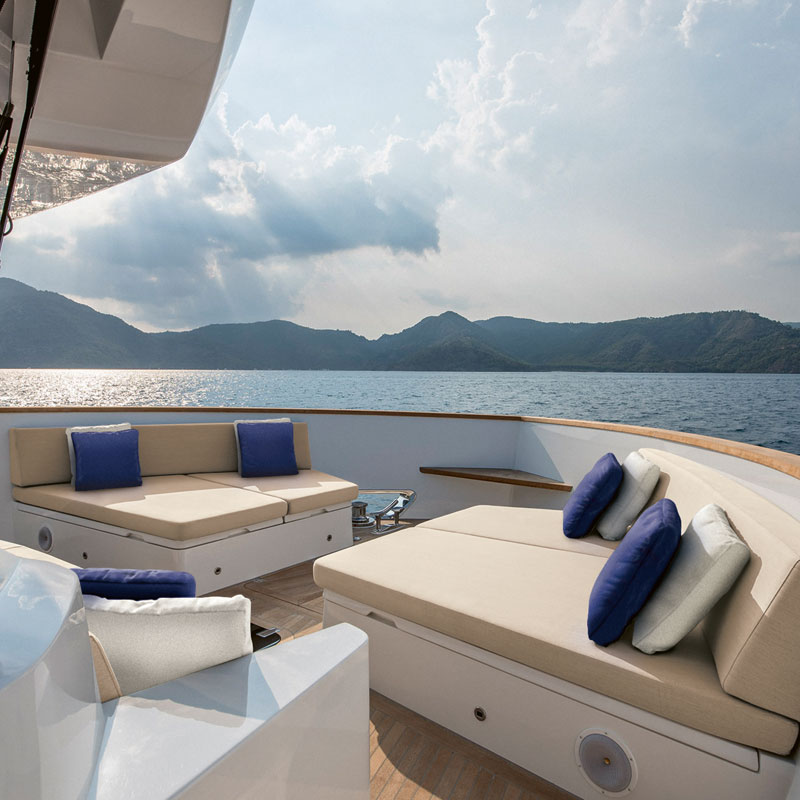
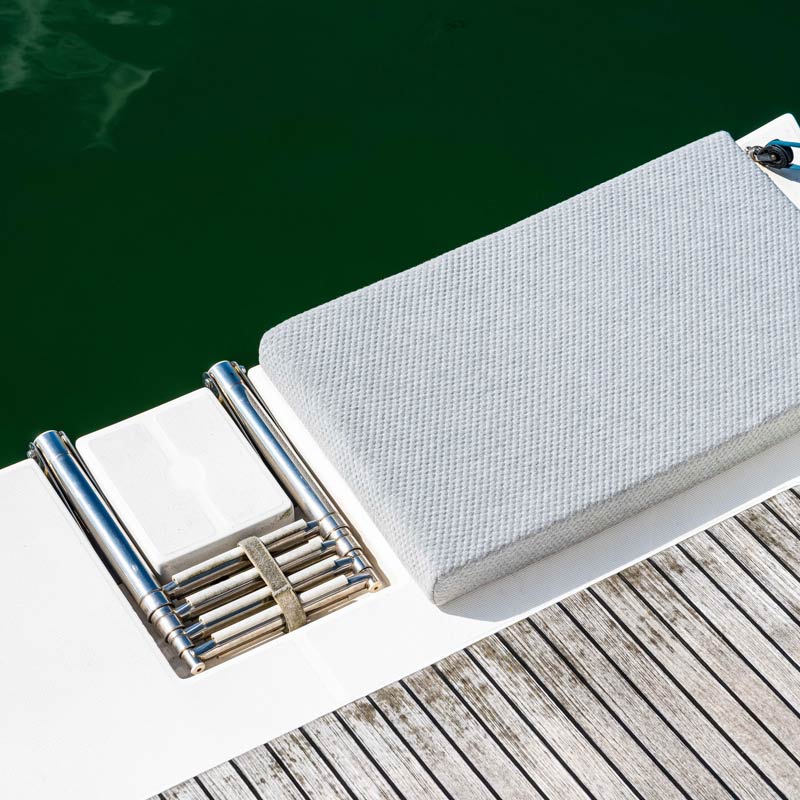
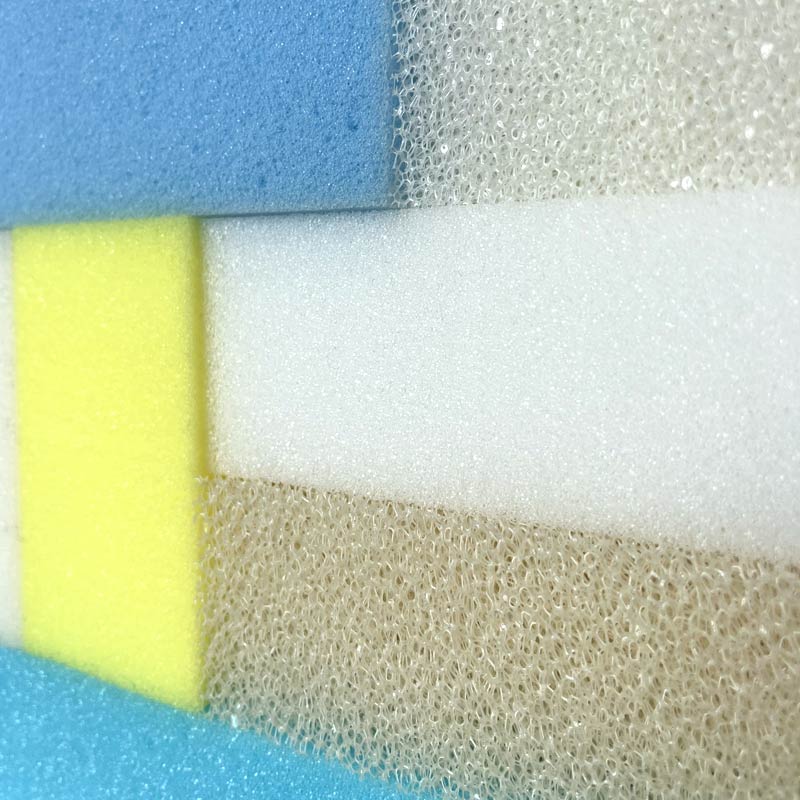
A large number of standards govern the technical performance of fabrics, coatings, foams and saddlery in the maritime world. Presented as acronyms on manufacturers' data sheets, these standards are difficult to interpret. Discover our guide to better understanding the main categories of standards that you will find on manufacturers' data sheets.
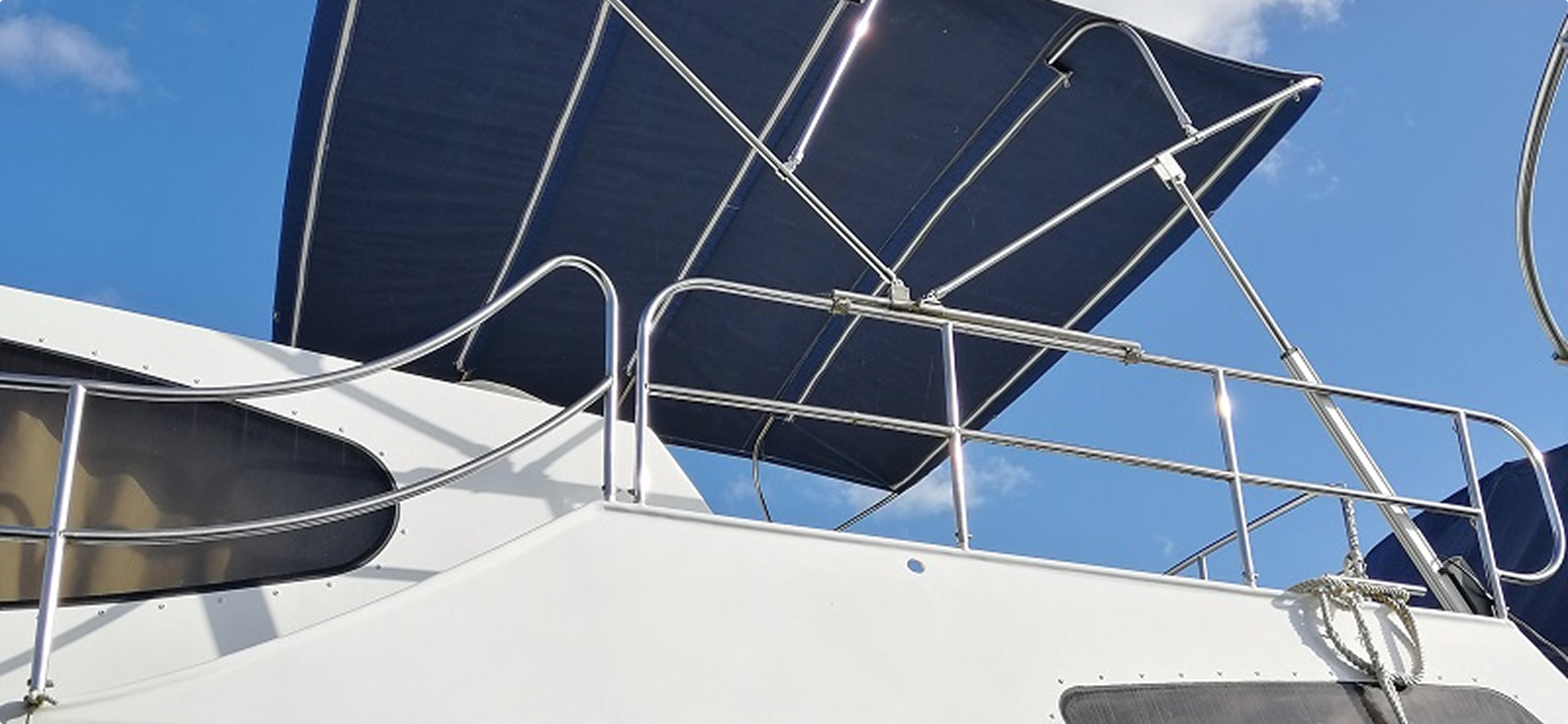
Example of a project
Lorem ipsum dolor sit amet, consectetuer adipiscing elit, sed diam nonummy nibh euismod tincidunt ut laoreet dolore magna aliquam erat volutpat. Ut wisi enim ad minim veniam, quis nostrud exerci tation ullamcorper suscipit lobortis nisl ut aliquip ex ea commodo consequat. Lorem ipsum dolor sit amet, quis consectetuer adipis elit. 50mots
UV resistance
The resistance of fabrics to UV radiation is controlled by prolonged exposure tests. The most common performance levels are represented by the standards :
- ISO 105-B2 and ISO 105-B4 Colour fastness: assesses the resistance of colours to light. Crucial for permanently exposed coloured fabrics, performance is rated from 1 (very poor) to 8 (excellent). For greater durability, we recommend selecting a fabric rated between 5 and 8 for the most exposed areas.
- ISO 4892 UV resistance: a test method for resistance to UV by exposure to artificial light. In concrete terms, this standard indicates that the fabric is capable of withstanding over 1,000 hours of exposure without fading.
Waterproofing and breathability
In terms of nautical saddleryWaterproofing and breathability are essential criteria, particularly for seating exposed to humidity or heat. There are several standards for quantifying these properties:
- ISO 811 Water resistance: measures the water pressure a fabric can withstand before allowing water to pass through (in mm of water column).
- ISO 62 Water absorption: measures the amount of water absorbed, a key criterion for upholstery foams.
- ISO 15496 and ISO 14268 This is important for breathable foams such as those from Dryfeel.
- ISO 9237 Air permeability: assesses the air permeability (or breathability) of a textile. It determines the quantity of air passing through a fabric under a given pressure.
⚠ What you need to know some coatings are testing the performance of fabrics in marine environments. Standards ISO 9227 and ASTM B117 reproduce salt spray conditions, for example, to assess their resistance to corrosion and premature ageing.
The density and hardness of foams
The density of the foam in your marine upholstery is a key factor in its durability, while its hardness has an impact on comfort.
- ISO 845 defines the method for measuring the apparent density of flexible cellular materials (such as foams), a key indicator for assessing their quality and durability.
- ISO 3386-1 and 3386-2 Standards: used for polyurethane foams, these standards describe test methods for hardness and elasticity under different compression conditions.
- ISO 2439 A method of measuring the hardness of flexible cellular materials (such as PU or HR foams), expressed in kilopascals (kPa), which makes it easier to compare firmness levels between different foams.
⚠ To find out moreDiscover our article on the different foams for marine upholstery.
Abrasion resistance
Le Martindale test (ISO 12947-2) is achieved by subjecting a coating to circular rubbing with an abrasive cloth. It measures the number of cycles before the appearance of broken threads or aesthetic alterations to the covering. To compare the resistance of fabrics, refer to the "number of cycles" shown on the manufacturers' technical data sheets.
- ASTM D751 (American standard): assesses the resistance to abrasion, perforation and bending of coated coatings.
Resistance to tearing
Tear tests called Trapeze (equivalent ISO 9073 or ASTM D5587) and Elmendorf (equivalent ISO 13937 or ASTM D1922) determine the force required to tear a sample of fabric under tension. Measured in Newtons, tear strength is essential, particularly for sails and upholstery exposed to repeated stress.
Fire safety standards
In France, the reaction to fire of materials is commonly indicated by the abbreviation M, classified into 5 categories:
- M0 non-combustible (the highest standard of fire performance).
- M1 combustible, non-flammable
- M2 Flammable : low flammability fuel
- M3 Medium flammable
- M4 highly flammable combustible
For boating, there is the IMO standard (International Maritime Organization), which provides a strict framework for requirements in terms of fire safety professional vessels, such as ferries, yachts or cruise ships operating in international waters. Visit private pleasure craft are not obliged to to comply with IMO standards.
Understanding technical standards is essential if you want to choose materials that perform well for your boat. However, the large number of standards that change from year to year makes it difficult to compare products from different brands. When in doubt, always seek professional advice.
Your projet
Are you a professional (interior designer, architect, shipyard, manufacturer, brand, designer…) with a specific requirement? Our team supports you in designing tailored solutions, including benches, cushions, custom layouts, textile furniture, and more.