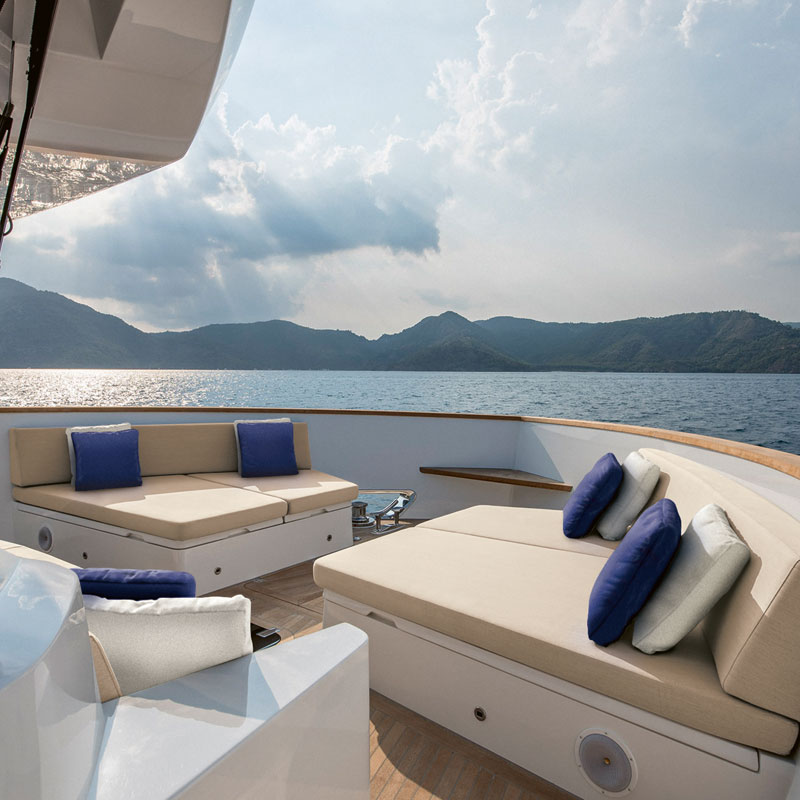
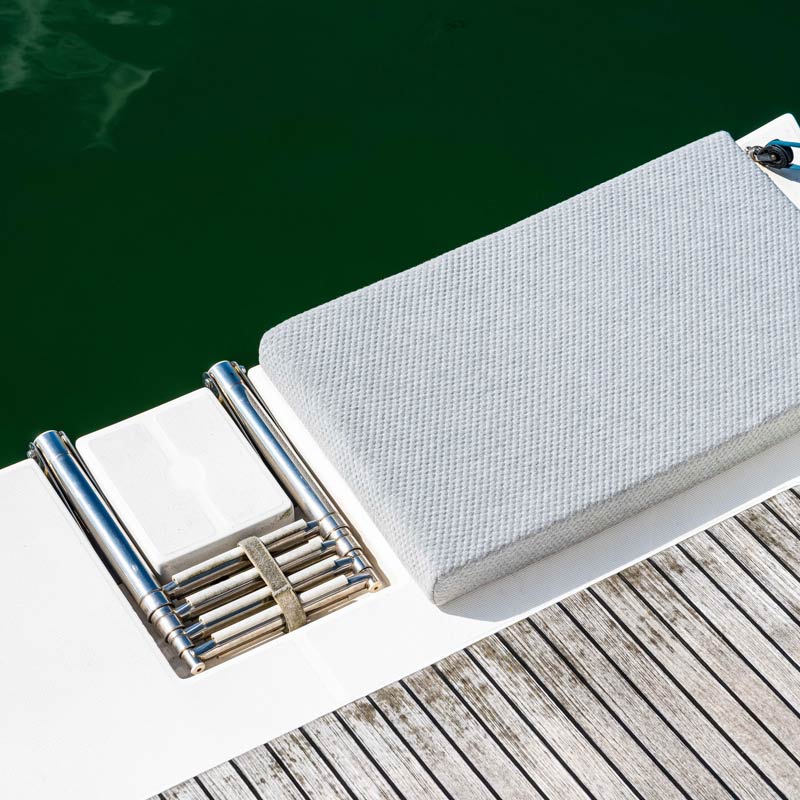
Resistant to humidity and temperature variations, the foams used in nautical upholstery are specially designed to withstand marine stresses. But their performance varies considerably depending on the density and type of foam chosen.
This guide will help you select the most suitable foam for your needs, your type of boat and its use (indoors or outdoors).
The main families of foams for boating
In marine upholstery, there are four main families of foam, each adapted to a specific use: foam polyether (standard and economy), foam High Resilience (superior quality and rebound), foam reticulated (quick-drying for outdoor use) and foam with closed cells (waterproof and ultra-resistant).
Foams for interior upholstery
Inside the boat, the choice of foam determines both the comfort and durability of the seats and berths. There are two types of foam, depending on the intensity of use:
- Polyether foam (RP) The most economical and suitable for moderate use. It is suitable for seats, backrests, occasional berths or benches that are used infrequently. However, it is still less comfortable than HR foams, and tends to collapse more quickly depending on its density.
- High Resilience (HR) polyurethane foam HR foam: more durable, it offers greater comfort and excellent durability. Sometimes referred to as "Bultex" foam, HR foams are perfect for regular sleeping or for seating that is used intensively...
Foams for exterior upholstery
- Cross-linked polyether foamDryfeel foams are specially designed for outdoor use. Its open-cell structure allows water to circulate and dry quickly. Its resistance to moisture means it won't mildew, while remaining comfortable over time. It is particularly recommended for cockpit cushions, sunbeds and outdoor seating.
- Closed-cell foam is a rigid foam offering total waterproofing. Recommended for the most exposed areas, such as floating structures or "structural" cushions (e.g. trunks, technical backrests, front deck upholstery), it is less comfortable than reticulated foam.
Density and hardness of foams
As well as the type of foam, two technical parameters need to be taken into account: density and hardness. These are two key criteria affecting comfort and durability.
- Density Foam density: measured in kg/m³, is an indicator of quality and durability. A foam containing more material will sag less over time, and will therefore be more durable. For example, an HR foam of 35 to 40 kg/m³ will give you good resistance over time.
- Hardness Hardness: measured in kilopascals (kPa), determines firmness and sinkability. Depending on the level of hardness, foams are considered soft, semi-firm, firm or extra-firm. The choice of hardness should therefore be adapted according to use and your comfort preferences.
⚠ What you need to know Density and hardness are not directly linked. A dense foam can be soft, just as a light foam can remain firm. To combine comfort and support, cushions are often multi-layered, with a soft top layer for comfort and a firmer base for support.
Cutting foam to size
Unlike standard furnishings, the marine saddlery must adapt to complex configurations: non-right angles, recesses, inclined or curved surfaces, etc. This is where the made-to-measure cutting Made from precise measurements or technical drawings, to precisely match the lines of your boat.
Perfectly fitted, it will give you optimum comfort and impeccable looks. The precision of the cut plays a role in the final look and comfort: a clean cut avoids parasitic tension and guarantees better resistance over time. This level of precision is essential, for example, for V-shaped berths, cockpit seats, saloon benches and deck cushions. It means that every available centimetre on board can be optimised, while ensuring the best possible fit. excellent durability.
Choosing the right foam for nautical upholstery
Before order made-to-measure foam For your upholstery, it is therefore essential to precisely identify its type, such as its density and hardness according to its intended use, indoors or outdoors, and the desired level of firmness and hardness. To extend their life, discover our caking care of your nautical upholstery.
Your projet
Are you a professional (interior designer, architect, shipyard, manufacturer, brand, designer…) with a specific requirement? Our team supports you in designing tailored solutions, including benches, cushions, custom layouts, textile furniture, and more.